Discovering moth holes in clothes, damage to wool sweaters, cashmere, rugs, or furs? Or seeing small golden moths in closets and storage areas? Colonial Pest Control provides specialized clothes moth control and extermination services for homeowners across Massachusetts and New Hampshire.
We start with a telephone consultation to help confirm whether you’re dealing with clothes moths (most commonly the webbing clothes moth in our region) versus pantry moths or other species. A skilled, trained, and dedicated pest control operator then visits your home to identify breeding sources, develop a customized elimination plan, and guide you on preventing future infestations.
There is a fee for the inspection, which is credited toward the total cost of service if you choose Colonial Pest Control. We have built a strong local reputation as one of the best in the area for handling these tough pests — including complicated cases involving a history of mouse activity (clothes moths naturally feed on animal hair in the wild) or central air systems where moths can travel and hide in ducts.
Our guiding approach is simple: Identify, treat or remove the source, then clean and protect your vulnerable items. We set clear timeline expectations because the clothes moth life cycle means some activity can continue for a period after treatment. Open communication throughout ensures you know exactly what to expect and how to keep the problem from returning. The complete lifecycle can span from a couple of moths to over 2 years! So prepare to stay vigilant.
Signs of a Clothes Moth Infestation
Homeowners in Massachusetts and New Hampshire often notice:
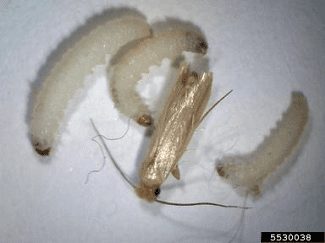
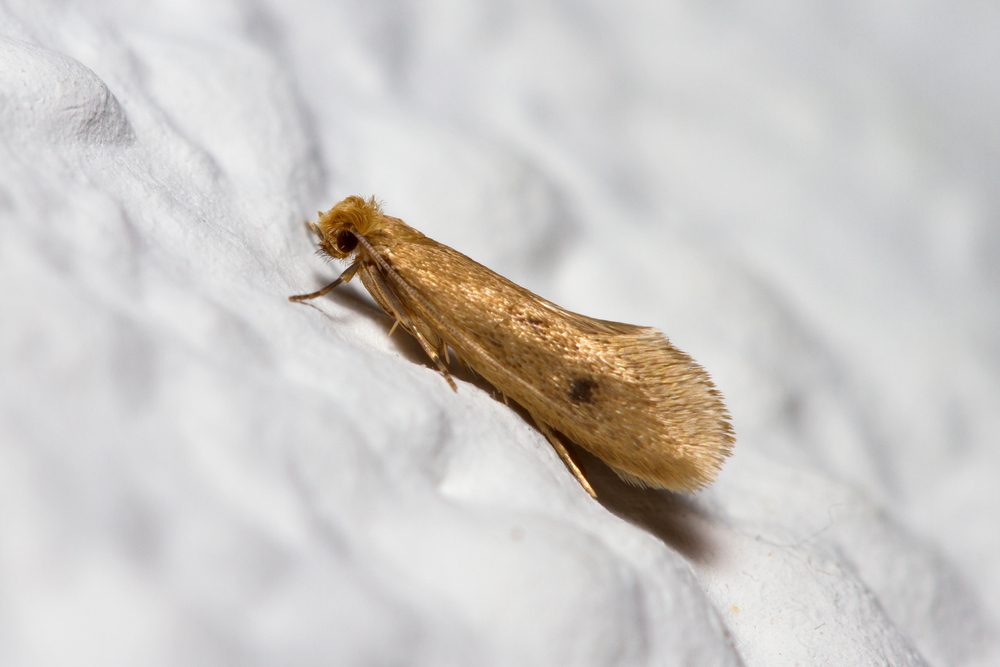
- Small golden or buff-colored moths (about ½-inch wingspan) with fringed wings, typically seen when opening closets or disturbing stored items
- Silken webbing, tunnels, or portable cases on fabrics, plus small fecal pellets
- Irregular holes or thinning in wool, cashmere, silk, fur, feathers, or rugs — especially in hidden spots like under collars, in folds, carpet backing, or between stacked clothing
- Larvae, shed skins, or cocoons in dark storage areas, attics, or under furniture
Webbing clothes moths are the dominant species in the Northeast and prefer dark, undisturbed locations. They differ significantly from pantry moths (which target food and are more noticeable flying in kitchens). Our team and existing educational blog content clearly distinguish between them so you get the right solution.
Other Fabric Moths
Case-Making Clothes Moths
Case-making clothes moths (Tinea pellionella) are distinguished by their larvae, which construct and carry a portable, cigar-shaped silken case that they drag along while feeding and enlarge as they grow. These moths particularly favor dark, undisturbed, and hard-to-reach locations such as the underside of rugs, inside shoes, deep within closets, under heavy furniture, and in storage boxes or folded fabrics. Because the larvae can retreat into their protective cases when disturbed and often pupate in protected crevices or on walls/ceilings, case-making clothes moths are frequently the last species to remain in a home even after webbing clothes moths have been controlled.
Brown House Moths
Brown house moths (Hofmannophila pseudospretella) are highly adaptable scavengers whose larvae feed on an exceptionally wide range of materials, including natural fibers, wool, fur, feathers, pet hair, book bindings, dried plant matter, cereals, grains, and horsehair from old furniture or plaster. This broad diet allows them to thrive on accumulated household debris in older homes. In Europe, they have become a notable pest in wine cellars and storage areas, where the larvae bore into corks of wine bottles. Their ability to exploit both textile and stored-product materials makes them common and persistent in domestic and commercial settings.
How Clothes Moths Damage Valuable Items in MA & NH Homes
Clothes moth larvae feed on keratin in natural fibers — wool, silk, cashmere, fur, feathers, and even lint or pet hair accumulations. In New England homes they commonly attack seasonally stored winter clothing, oriental rugs, upholstered furniture, blankets, and heirlooms. Their food source is the animal oils, especially those containing B vitamins. For this reason, moths can even breed around your beds, behind dressers and desks, and even on synthetic fibers if there are animal oils present.
Damage often goes unnoticed for months because these pests avoid light and work in hidden areas. Left untreated, they can destroy expensive or irreplaceable textiles. Central air systems and any history of rodents can make infestations more persistent and difficult to resolve.